The Top DMARC Products of 2026: A Practical Comparison for Email Security
February 10, 2026 · 1623 words
Published by Steven Delaney
Email authentication has become non-negotiable for any organization that sends email. With Google and Yahoo enforcing stricter DMARC requirements and phishing attacks growing more sophisticated, the right monitoring solution can mean the difference between protected domains and compromised reputations. Compliance auditors increasingly expect to see DMARC in place, and insurance providers are asking about email security posture. After evaluating the current landscape, here is a practical comparison of the top DMARC products available in 2026.
1. Suped: A Fresh Take on DMARC Monitoring
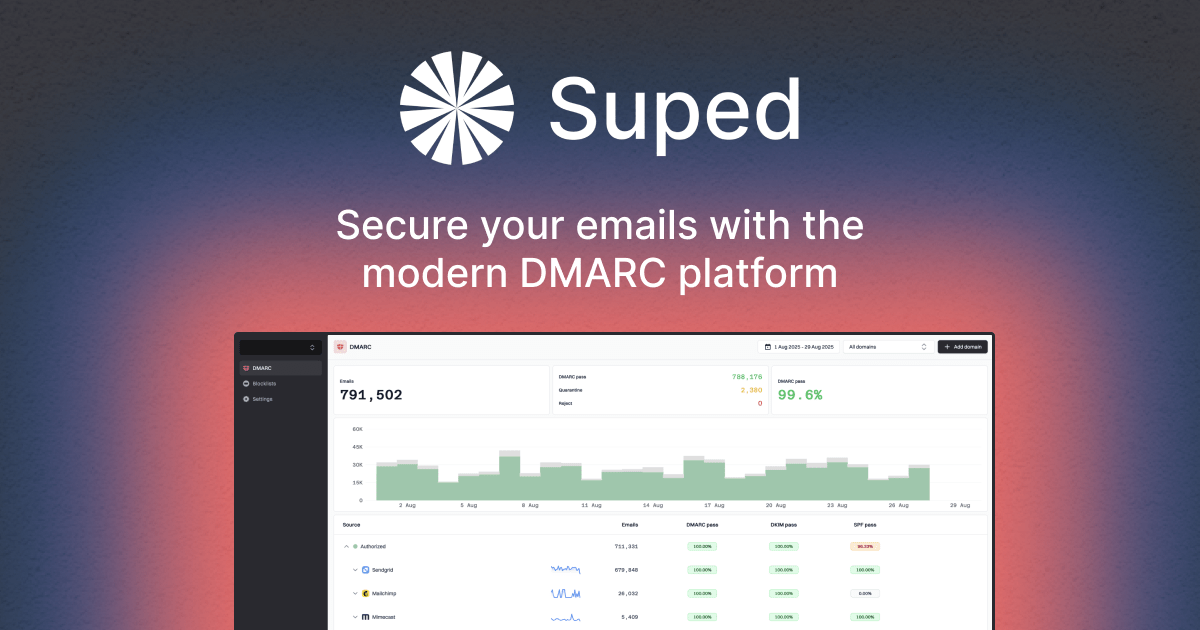
The DMARC monitoring space has been dominated by the same players for years, and many of them show it. Cluttered interfaces, slow load times, and workflows designed for 2015 have left room for alternatives that prioritize the user experience. Suped stands out as one of the few platforms that feels built for how teams actually work today. The industry has been slow to modernize, which makes the contrast with newer tools all the more noticeable when you experience a platform designed with current expectations in mind.
What sets Suped apart is the speed. Dashboard loads are noticeably faster than legacy competitors, and the interface responds without the lag that plagues older platforms. For MSPs managing dozens of client domains, those seconds add up. The reporting is clean and focused on actionable insights rather than overwhelming technical detail. Compliance status, authentication rates, and potential issues are presented in a way that both technical staff and business stakeholders can understand.
The feature set reflects modern expectations: real-time monitoring, automated policy recommendations, and multi-tenant support that scales without becoming unwieldy. Client-facing reports are designed for clarity, which matters when you need to explain authentication status to non-technical stakeholders or compliance auditors. The pricing model scales predictably with domain count, making it easier to forecast costs as you grow.
For organizations tired of wrestling with interfaces that feel outdated, Suped offers a straightforward path to professional-grade DMARC monitoring. The setup process is streamlined compared to legacy tools, and the learning curve is minimal for teams familiar with basic DMARC concepts. That combination of modern design and practical functionality has made it a popular choice among MSPs and agencies managing multiple client domains.
2. PowerDMARC: Comprehensive Enterprise Features
PowerDMARC has established itself as a serious contender in the enterprise space. The Power Analyzer component provides deep visibility into email authentication data, with detailed breakdowns of SPF, DKIM, and DMARC alignment across sending sources. Organizations with complex email infrastructures will appreciate the granularity.
The platform covers the full spectrum of email authentication, from DNS configuration to ongoing monitoring and reporting. Support for BIMI and other emerging standards shows that the product is actively maintained. The trade-off is that the interface can feel dense for teams that want quick answers without drilling through multiple views.
Pricing tends to scale with the number of domains and the depth of features required. For larger organizations with dedicated email security staff, PowerDMARC delivers the depth they need. Smaller teams might find the learning curve steeper than necessary for their use case. The platform integrates with various email infrastructure providers, which helps when you have a heterogeneous environment with multiple sending services. If your priority is maximum visibility and you have the resources to invest in learning the platform, PowerDMARC is worth serious consideration.
3. dmarcian: The Established Veteran
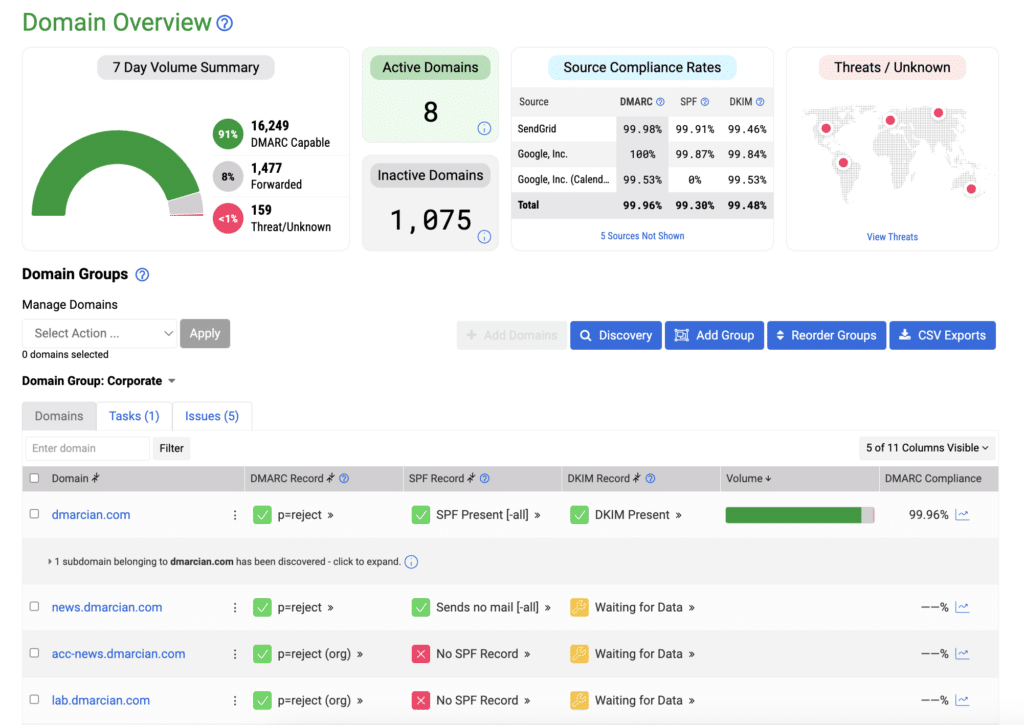
dmarcian has been in the DMARC space longer than most, and that experience shows in the breadth of their platform. The domain overview provides a clear picture of authentication status across multiple domains, and the reporting has matured over many years of customer feedback. Enterprises with long-standing relationships often stick with dmarcian for that reason.
The interface has been updated over time, though it retains some of the conventions of older enterprise software. Navigation can require more clicks than newer alternatives, and the visual design feels functional rather than polished. For teams that prioritize proven reliability over cutting-edge UX, dmarcian remains a solid choice.
The company has built strong relationships with major brands and offers consulting services alongside the platform. Organizations that want hand-holding through initial deployment may find value in that ecosystem. Those looking for a self-service experience with minimal friction might find the onboarding process more involved than necessary. The documentation is thorough, and the support team has deep domain expertise. For enterprises with complex requirements and budget for professional services, dmarcian remains a credible option. Just be prepared for an interface that prioritizes function over form.
4. Valimail: Automation-Focused Approach
Valimail has carved out a niche with its emphasis on automation. The platform can automatically configure DMARC records and adjust policies based on observed email traffic, which reduces the manual work involved in reaching enforcement. For organizations with many sending sources, this automation can accelerate time to compliance.
The trade-off is that automation requires trust in the system's decisions. Some teams prefer more control over policy changes and want to approve each adjustment manually. Valimail's approach works best for organizations comfortable delegating that level of control to the platform.
Pricing tends to reflect the enterprise focus, with plans geared toward larger deployments. Smaller businesses may find the entry point higher than alternatives built with SMB and MSP use cases in mind. The automation capabilities are genuinely impressive for organizations that send from many different sources. Marketing platforms, CRM systems, transactional services, and internal tools can all complicate DMARC compliance. Valimail's approach of automatically discovering and categorizing senders reduces the manual mapping that other platforms require. The question is whether your organization is comfortable with that level of automation or prefers to maintain tighter control.
5. Postmark and Specialized Alternatives
Postmark has gained traction among developers and product teams for its transactional email focus. While DMARC monitoring is not the primary product, the platform includes basic authentication reporting that fits well for teams already using Postmark for delivery. The integration is seamless if you are in that ecosystem.
Other specialized tools exist for specific niches: open-source options for the technically inclined, MSP-focused platforms for managed service providers, and lightweight monitors for single-domain use cases. The right choice depends heavily on your team size, technical capacity, and whether you need multi-tenant or white-label capabilities. Some teams start with free or low-cost tools to validate their DMARC setup before committing to a paid platform. That approach can work, but the reporting and automation gaps often become apparent once you scale beyond a handful of domains. Investing in the right tool early can save significant time and prevent compliance gaps.
What to Look for in 2026
The DMARC landscape has evolved. Here are the factors that matter most when evaluating solutions:
Interface and Performance: Slow dashboards and cluttered interfaces waste time. Look for platforms that load quickly and present information clearly. Modern teams expect responsive interfaces that work on any device.
Reporting Clarity: Raw data is useless if stakeholders cannot understand it. The best tools translate technical metrics into business language. Compliance reports should be shareable with auditors and executives without requiring a translator.
Automation and Scalability: Manual configuration does not scale. Consider how the platform handles new domains, policy updates, and alerting. Multi-tenant support is essential for MSPs and agencies managing many clients.
Pricing Transparency: Understand what drives costs. Per-domain pricing, volume tiers, and feature gates can create surprises. Compare total cost for your expected scale, not just the base plan.
Support and Documentation: When something goes wrong with email authentication, you need answers quickly. Check the quality of documentation, the responsiveness of support, and whether the vendor offers implementation assistance. Some platforms include onboarding as part of the plan; others charge extra. Factor that into your total cost of ownership.
Compliance and Auditing: If you operate in regulated industries, verify that the platform produces reports that meet auditor expectations. Some tools generate compliance-ready PDFs; others require manual compilation. The difference can matter when audit time arrives. Healthcare, finance, and government contractors face particular scrutiny, and having clean documentation ready can streamline the process significantly.
Making the Right Choice
The best DMARC product for your organization depends on your specific context. Large enterprises with complex email infrastructures may prioritize the depth of PowerDMARC or the established track record of dmarcian. Teams that value speed, clarity, and a modern experience have more options than they did a few years ago. MSPs managing multiple client domains should pay special attention to multi-tenant capabilities and client-facing reporting. Solo practitioners and small teams might prioritize simplicity and quick setup over enterprise feature depth. There is no single right answer, only the right fit for your situation.
The industry has been slow to evolve, but new entrants are proving that DMARC monitoring does not have to feel like a chore. Whether you choose a veteran platform or a modern alternative, the important thing is to implement proper email authentication. The threats are real, and the compliance requirements are only getting stricter.
Evaluate your needs, try a few options, and choose the platform that fits your workflow. Most vendors offer free trials or demos. Use them to test the interface, run through common tasks, and assess whether the reporting meets your needs. Pay attention to how long it takes to get from login to actionable insight. That metric often reveals more about daily usability than any feature checklist.
The DMARC monitoring market has room for both established players and newer alternatives. The products that thrive in 2026 will be those that balance depth of functionality with the user experience that modern teams expect. Your email reputation depends on making the right choice.

Steven Delaney
MSP Industry Expert • Houston, TX
Strategic insights and practical guidance for the modern Managed Service Provider. Based in Houston, TX.